Originally published in Psychology Today, April 9, 2025
Written by Julie Radlauer- Doerfler and Spencer Abel
Growing up, I never spent a Saturday night at home. For me, the world was outside. In my generation, Saturday nights were for going to the skating rink, playing sports under the lights, and going to parties. Embracing the outside world meant opening the front door and physically leaving home to find community.
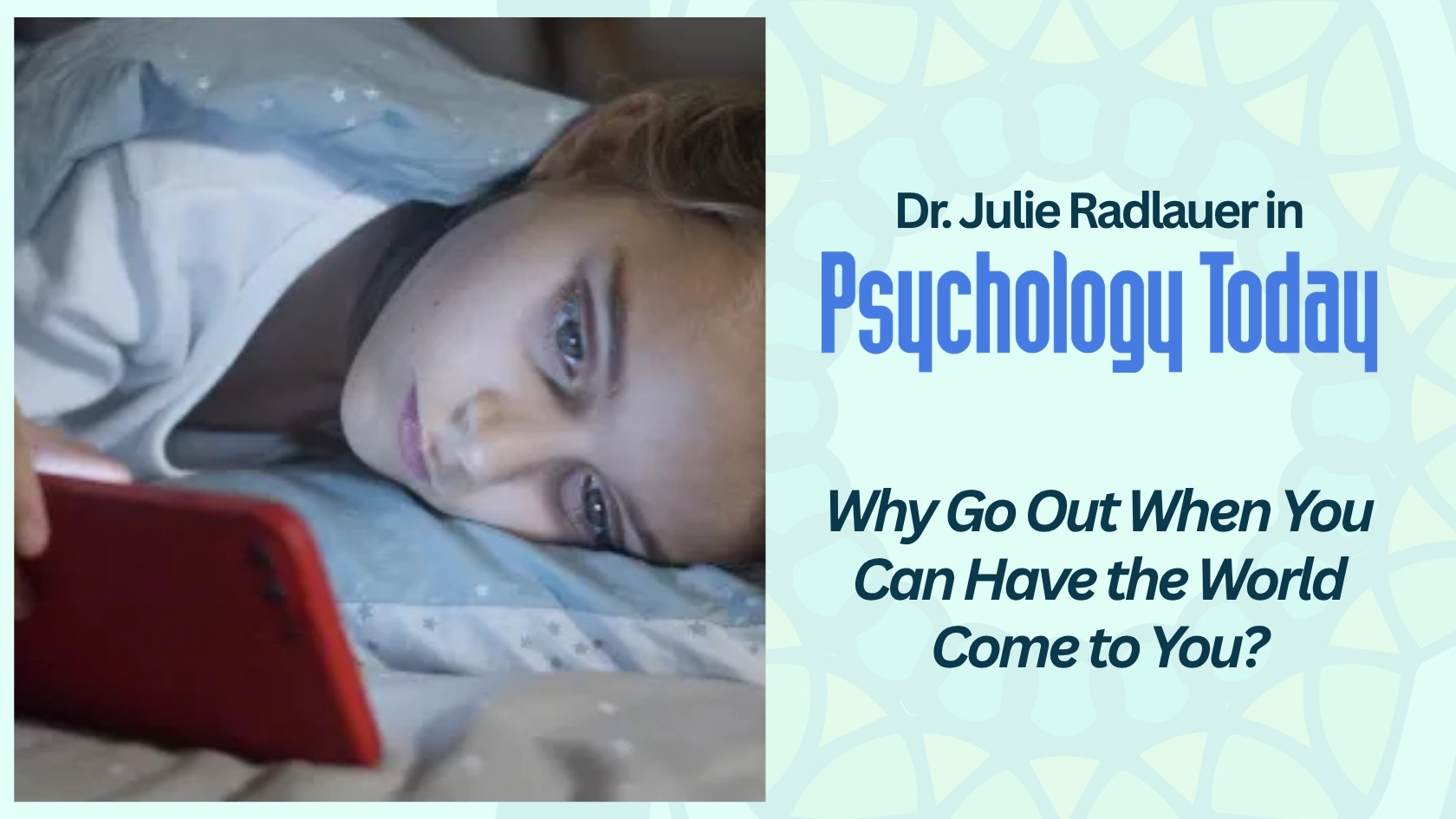
But as the young people in my life demonstrate, these days, we can be social in the comfort of our own homes while connecting with friends. The attitude seems to be, why go out when you can have the world come to you? To be entertained, chat with friends, and find community, nowadays, all we need to do is swipe up.
Honestly, as a parent, this online phenomenon sure makes life easy; we don’t have to worry about our children getting into trouble, it’s much less expensive, and we don’t have to wait up all night. But as a researcher, I’m terrified of the consequences as the online world and social media have become the most prevalent third place.
The term “third place” was coined by sociologist Ray Oldenburg in 1989 and refers to a place where community is built that isn’t the home, work, or school. When Oldenburg coined the term, he never fathomed that third places could exist outside the physical realm.
Third places were community centers, bowling leagues, and churches. They were spaces you had to frequent with your physical body to experience. The act of getting off the couch to inhabit a neutral space full of “regulars” that serves as a home away from home has benefits a screen can never emulate. Third spaces help us maintain a healthy work-life balance. They expose us to new people, help us forge meaningful relationships, and give us a sense of belonging.
But these days, third places are in decline. The most prevalent third place for the past two millennia has been religious communities. Entire social ecosystems were built around faith-based organizations that are a source of social connection and community support, and provide meaning and purpose. In the 1960s, half of Americans frequented religious institutions. In the early 2000s, that percentage dropped to 42%. Today, just 30% of Americans attend religious services regularly, with many doing so on Zoom.
So, if Americans no longer have third places in religious communities, have they filled the void elsewhere? Not exactly.
For decades, we used to spend about six and a half hours a week with friends, but that number plummeted by 37% by 2014, as we spent just four hours a week with friends outside of work and school. We all know how important socializing is to humans, to the point that studies have shown that not having close friends is tantamount to smoking 15 cigarettes a day. So, it’s incredibly alarming that 30% of young Americans report feeling lonely every day.
There are a few culprits to blame for the loneliness epidemic; as a society, we are not trusting of others these days, which inhibits connection. Also, we live in a fast-paced world where it’s difficult to make time to connect, and in the U.S., we have moved away from nuclear families, which seriously stymies connection. But let’s be clear, social media is by far the most dangerous contributing factor to loneliness.
A recent study identified that young people spend 18 hours per day between school, homework, and sleep and approximately six hours a day on social media. When you do the math, there is no time for unstructured socialization. The more doom-scrolling our kids partake in, the higher the risk of becoming depressed, with children who spend more than three hours a day on social media doubling their risk of depression and anxiety.
In one corner, you have a highly impressionable, underdeveloped adolescent brain that is producing more oxytocin and dopamine than ever before. In the other corner, you have legions of the best behavioral psychologists and developers in the world conspiring to create a product that is as compelling as possible. The science is the same for children and adults alike, the algorithm determines what we like, and feeds us more of it. The more we see, the more dopamine is released, which keeps us engaged.
That’s why, instead of picking up new hobbies and spending time in real-life third places, we are opting to stay in and stare at screens for hours to receive a never-ending supply of dopamine hits. Rather than putting ourselves out there to connect in person, we opt for this readily accessible third place that consistently gives us the results we’re looking for.
It’s difficult pushing ourselves out of our comfort zone, but you can do so by using social media to your advantage. Use social media to inform your choices. If you scroll about sports, find an in-person sports outlet. If it’s politics, find an avenue to get engaged locally. The goal is to be with other human beings and experience community and belonging.
For the young people in your lives, recognize it’s even more difficult. Don’t expect your child to engage in a third place they have no interest in; instead, focus on their strengths, interests, and talents. If you find them watching endless videos about art, ask if they want to join an art class. If they’re watching dance video after dance video, ask if they want to join a dance class.
Most importantly, recognize that this is hard for all of us. Think about when you’ve committed to making a change, there are good days and bad days. Be mindful that finding a third place may require a proactive approach, and with intentionality, we can create community, and ultimately, happiness.
Spencer Abel is a writer and information technology analyst who writes about the intersection of technology and mental health.
References
Putnam, R. D. (2000). Bowling alone: The collapse and revival of American community. Touchstone Books/Simon & Schuster. https://doi.org/10.1145/358916.361990
Gallup. (n.d.). Church attendance has declined across most major U.S. religious groups. Gallup.com. Retrieved March 30, 2025, from https://news.gallup.com/poll/642548/church-attendance-declined-religiou…
Bostock, B. (2023, September). The loneliness epidemic is linked to a decline in ‘third places’ like parks and community centers. Business Insider. https://www.businessinsider.com/loneliness-epidemic-decline-in-third-pl…
Haden, J. (n.d.). Decades of research shows friends make you happier, healthier—but if you want to live a longer life, there’s one large catch. Inc.com. Retrieved March 30, 2025, from https://www.inc.com/jeff-haden/decades-of-research-shows-friends-make-y…
Gallup. (n.d.). Teens spend an average of 7 hours on social media per day. Gallup.com. Retrieved March 30, 2025, from https://news.gallup.com/poll/512576/teens-spend-average-hours-social-me…
Share: