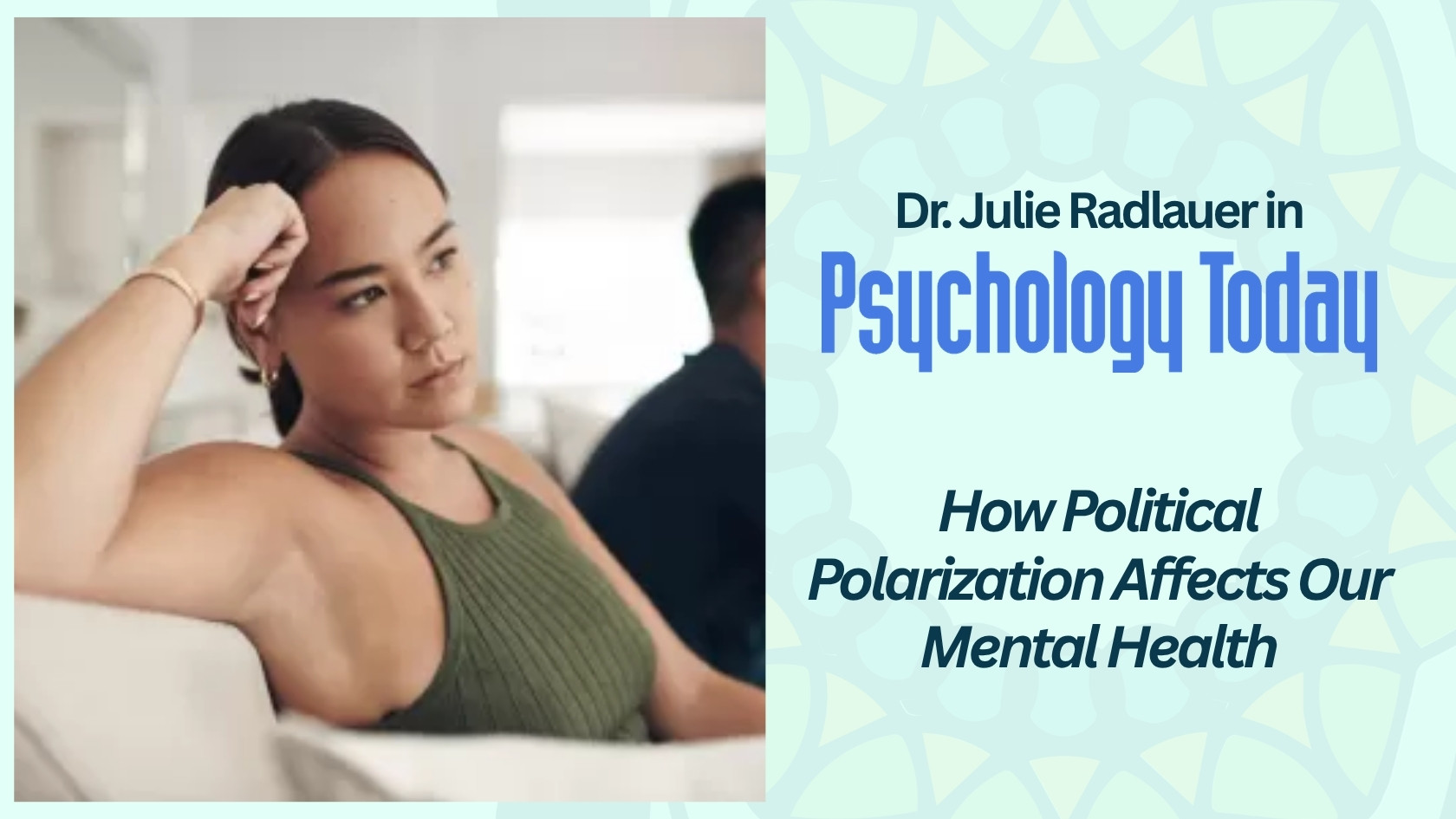
Originally published in Psychology Today, July 21, 2025
The other day, I took my children to the barbershop, one we’ve been going to for years. Not much has changed in that barbershop over the years—at least, not until last week. While the baseball posters and framed photos of happy customers were still there, an array of political merch now filled in the gaps.
I know that the person who has cut my children’s hair for the past 10 years is very private, so the political remodeling gave me pause. When they called our name, I walked back with my son to check in on our barber friend. He said that he always knew of the owner’s views, but now it was different at the shop. Rather than keeping politics out of it, they decided to go all in. He said that even though he has been working there for years, he is now not comfortable coming to work.
As we were leaving, he whispered that he was looking for another job and would let us know where he would be working in the future.
America may have always been political, but we have never been as polarized as we are today. In today’s America, people leave their jobs because their boss hangs the wrong flag in the office. In today’s America, long-standing friendships end because a vote was cast for that other guy. In today’s America, political assassinations and storming of the Capitol, things we thought could never happen in our country, are now very much a reality.
Sadly, this polarization translates to mental turmoil for many. The more animated we become, the more flags we wave, the more internal angst is caused. These days, politics isn’t kept within the confines of D.C. Today, we wear our affiliation on our chest and are willing to uproot our lives because the political climate has changed.
Clearly, our country has gotten so politically polarized that it’s having a negative impact on our mental well-being.
A 2024 study published by the American Psychological Association (APA) found that 8 in 10 adults listed the future of the nation as a leading source of anxiety. It’s this stress that has led two in five adults to consider moving to a different country or state.
This kind of unease was more easily avoidable years ago, but the changing political climate and accessibility of 24/7 news have compounded our anxiety. In 2023, the APA published two diary studies in which researchers asked participants to carry a journal with them and log their emotional and behavioral responses to political events. On 81 percent of the days, participants responded that politics triggered a negative response. These negative responses manifested by way of fatigue, illness, dissatisfaction with life, and depression.
It’s probably not a surprise that consuming polarizing politics is bad for one’s mental health. What is surprising is just how severe the impact can be. In 2017, researchers found that political polarization can have just as much of a negative effect on your health as alcohol. After digging into the numbers, they found that 94 million Americans felt stressed by politics, 44 million had lost sleep, 30 million suffered physical harm, and 11 million had suicidal thoughts.
This study was conducted in 2017. Have things gotten any better since then?
A researcher involved in the 2017 study interviewed participants again in 2020. He found that reports of anxiety induced by politics had worsened. The most negative impacts were seen in respondents’ physical health, as many reported higher rates of stress, fatigue, and sleep loss. It wasn’t just that interacting with political news made them feel this way, but that the deteriorating political situation strained family relationships and led to fewer family interactions on account of conflicting beliefs.
Perhaps the greatest impact politics has on our mental health is its insidious way of wedging itself in between us and those we love.
Of the more than 12,000 respondents in a YouGov poll last year, 26 percent responded that they have had a friendship end because of disagreement over politics. Another YouGov poll found that 9 percent of romantic relationships ended due to a difference in politics. But as we’ve seen, it’s not just friendships and romantic partnerships that have ended, but also professional lives that have been turned upside down.
Americans are already lonelier than ever, with one in three Americans reporting feelings of loneliness every week. During a loneliness epidemic like this, many of us can’t afford to lose a close relationship.
For one, recognize that there is a difference between being informed and doomscrolling. To be aware of what’s happening in the world, a 10-minute morning podcast should do the trick. If you’re spending all your time refreshing your news aggregator or turning on the news every night, you really will think the world is burning. Treat news as news, not as a form of entertainment.
After digesting the news, we often feel hopeless, which impacts our mental health. Joining a politically aligned community group can empower you and give you back some of your agency. Making time to move your body or practice a favorite hobby is also a way to release stress from watching distressing news.
And while it’s easy to point fingers and think of anyone across the political aisle as a monster, make an attempt to humanize these people. Having a good-faith dialogue or even reading articles from the other side’s point of view can stretch your perspective and make you a more understanding person.
With all that is happening in the world, now more than ever, we need to connect locally with family, friends, and community.
References
Charlie Health. (2025, February). Politics and mental health. Charlie Health. https://www.charliehealth.com/research/politics-mental-health
Ford, B. Q., Feinberg, M., Lassetter, B., Thai, S., & Gatchpazian, A. (2023). The political is personal: The costs of daily politics. Journal of Personality and Social Psychology, 125(1), 1–28. https://doi.org/10.1037/pspa0000335
Smith, K. B. (2022). Politics is making us sick: The negative impact of political engagement on public health during the Trump administration. PLOS ONE, 17(1), e0262022. https://doi.org/10.1371/journal.pone.0262022
YouGov. (2024, August 16). Daily polling – Politics. YouGov. https://today.yougov.com/topics/politics/survey-results/daily/2024/08/1…
American Psychiatric Association. (2023, May). New APA poll: One in three Americans feels lonely every week. APA News Room. https://www.psychiatry.org/news-room/news-releases/new-apa-poll-one-in-…
Share: